



Key Points:
Finding good autism therapy for your child is stressful enough. Then you add the logistics of getting them to appointments, managing meltdowns in waiting rooms, and adjusting their whole routine, and it starts to feel impossible.
That's exactly why so many families are turning to in-home ABA therapy as their first choice. It removes a lot of the friction, and more importantly, it puts therapy where your child actually lives their life.
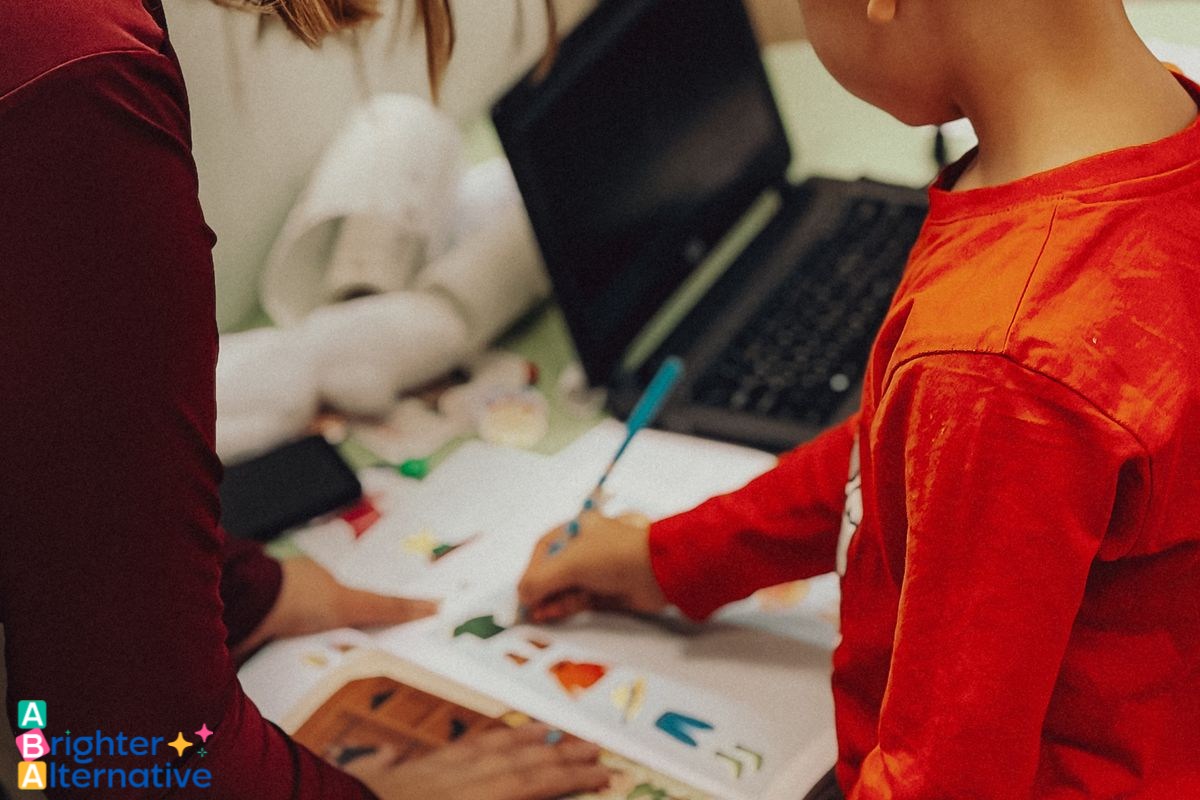
If you've been picturing a therapist sitting across from your child at a tiny desk with flashcards, that's not it. ABA therapy at home looks a lot more like a structured play session woven into your family's real routine.
A Registered Behavior Technician (RBT) comes to your home, usually for two to three hours at a time, and works directly with your child. They're guided by a Board Certified Behavior Analyst (BCBA), who designs the therapy plan, monitors progress, and makes adjustments over time. The BCBA doesn't always attend every session, but they're actively involved behind the scenes.
During a typical session, the therapist might:
Every goal is specific to your child. That's the point. The skills being practiced are ones your child actually needs, in the exact spaces where those needs show up.
Here's something that doesn't get said enough: generalization is one of the hardest parts of autism therapy. A child can learn to do something perfectly in a clinical setting, then seem to forget it completely at home. That gap is real, and it's a known challenge in the research literature.
When autism therapy at home is the setting, that gap shrinks considerably. Your child practices saying "I want a snack" in your actual kitchen, asking for help in their actual bedroom, and tolerating frustration during their actual daily routine. The skills stick because they're practiced in the real context where they matter.
Research from institutions like the Association for Behavior Analysis International consistently shows that skills learned in the natural environment transfer more effectively and maintain longer than those learned in artificial clinical settings. That's not a small detail — it's a core reason home-based ABA therapy continues to be a preferred approach for many families.
There's also the comfort factor. Children with autism often struggle with new environments. Bringing therapy to your home eliminates a significant source of anxiety and allows your child to engage better from the start.
-ink.jpeg)
This is a question worth asking clearly. When you search for "ABA providers near me," you'll find a range of providers, and the quality really varies. Here's what to look for.
BCBAs (Board Certified Behavior Analysts) hold a master's degree or higher and have passed a national exam. They design the therapy plan, conduct assessments, and supervise the therapy process. Your BCBA is your primary point of contact for questions about your child's goals and progress.
RBTs (Registered Behavior Technicians) are trained and supervised paraprofessionals who work directly with your child during sessions. They're required to complete 40 hours of training and pass a competency assessment. They're good at building rapport with kids and carrying out the daily work of therapy.
When you're evaluating providers, ask how often the BCBA actually observes sessions, how frequently the treatment plan gets reviewed, and how you'll receive progress updates. These aren't nitpicky questions; they determine whether your child's therapy actually adapts and improves over time.
The first phase of home-based ABA therapy is assessment, and it takes time. That's not a red flag, it's how good therapy is built. The BCBA will spend time observing your child, talking with you about your priorities, and evaluating your child's current skills across areas like communication, social behavior, self-care, and learning readiness.
From there, they write a treatment plan with specific, measurable goals. You'll be part of that conversation, and you should be. You know your child's triggers, preferences, and routines better than any clinician does.
Once therapy starts, the first few sessions often involve the therapist simply building a relationship with your child. Trust matters. A child who likes and feels comfortable with their therapist will engage better, try harder, and tolerate more challenging tasks. Don't be alarmed if early sessions seem more like play; that relationship-building is intentional and important.
This is where home-based ABA therapy really shines compared to other formats: you're not sitting in a waiting room. You can observe sessions, ask questions, and learn the same techniques the therapist is using. Over time, you become a co-therapist in your child's daily life, which dramatically increases the number of learning opportunities your child gets each day.
Most good ABA programs include parent training as a component. You'll learn how to respond to certain behaviors, how to use reinforcement effectively, and how to prompt skills without accidentally creating dependence. It's practical, hands-on, and it makes a measurable difference in outcomes.
Families who are actively involved in ABA therapy consistently see better results. That's not guilt-inducing, it's empowering. You have more influence over your child's progress than anyone else in the room.
This is probably why you're reading this article. When you type "in-home ABA therapy near me" into a search engine, you get a long list of providers, and it's genuinely hard to know where to start.
Here are the things that actually matter when choosing a provider:
One of the most common questions parents ask is how many hours of ABA therapy their child needs. The honest answer is: it depends, and anyone who gives you a definitive number without knowing your child is oversimplifying.
Research does suggest that more intensive therapy (20-40 hours per week) tends to produce stronger outcomes for children with moderate to severe needs, particularly when started early. But the right amount for your child depends on their age, skill level, learning pace, and what other structured activities they have in their week, like preschool or speech therapy.
Your BCBA should help you land on a recommendation that's genuinely based on your child's needs, not on what's most convenient for the provider's schedule. That's a conversation worth having openly.
For in-home therapy specifically, scheduling flexibility is one of the biggest practical advantages. Sessions can be arranged around nap times, school pickups, and sibling schedules in a way that center-based therapy often can't accommodate.
-ink.jpeg)
Not every child is best served by home-based ABA, and a good provider will be honest with you about that. Home-based therapy tends to work especially well when:
If your child needs more intensive structured learning or benefits from peer interaction during sessions, center-based therapy, or a combination approach might be worth exploring with your BCBA.
Most children with an autism diagnosis qualify. An initial assessment by a BCBA will confirm eligibility and help determine the right level of support. The process usually starts with a referral from your child's pediatrician or developmental specialist.
Many insurance plans, including Georgia Medicaid, cover ABA therapy. Coverage and prior authorization requirements vary, so it's worth contacting your provider directly to confirm. Most ABA providers will help you navigate that process.
Sessions are usually two to three hours for younger children and up to four or five hours for older kids. Frequency ranges from a few days a week to daily, depending on the recommended intensity in your child's treatment plan.
Consistency is really important in ABA therapy, and most providers try to keep the same RBT assigned to your child. Ask about their policy on therapist consistency and how they handle transitions when a therapist changes.
That's more common than you'd think. The early sessions often focus heavily on building rapport and making therapy feel fun before introducing more demanding tasks. A skilled RBT knows how to work with a resistant child gradually and without forcing engagement.
Searching for in-home ABA therapy near you can feel like you’re chasing options that all sound the same. You’re trying to figure out what really works without turning your routine upside down. That’s not a small ask.
At A Brighter Alternative, home-based ABA therapy is built around your child’s actual environment, not a clinical setup that disappears once the session ends. Skills are practiced where they’re needed most, right at home, in real moments that matter.
We keep things straightforward. You’ll understand what’s happening, why it matters, and how it’s helping your child move forward.
If you’re ready for ABA therapy at home that feels practical and consistent, reach out and see how it can work for your family.




Now Accepting GA Medicaid




-ink.jpeg)