


Key Points:
If you're weighing in-home ABA therapy in Gwinnett County, you probably have a mental list of questions already. Will a stranger showing up at your house feel disruptive? Will your child even cooperate outside of a clinic setting?
Those worries are normal, and most families find the format easier than they expected once the first few sessions are behind them. This guide walks through what a typical in-home ABA therapy visit involves, how home-based sessions compare to other formats like center-based ABA therapy, and which questions help you pick a provider you'll trust for the long haul.
By the end, you should have a clear picture of what the next few months would look like for your family.
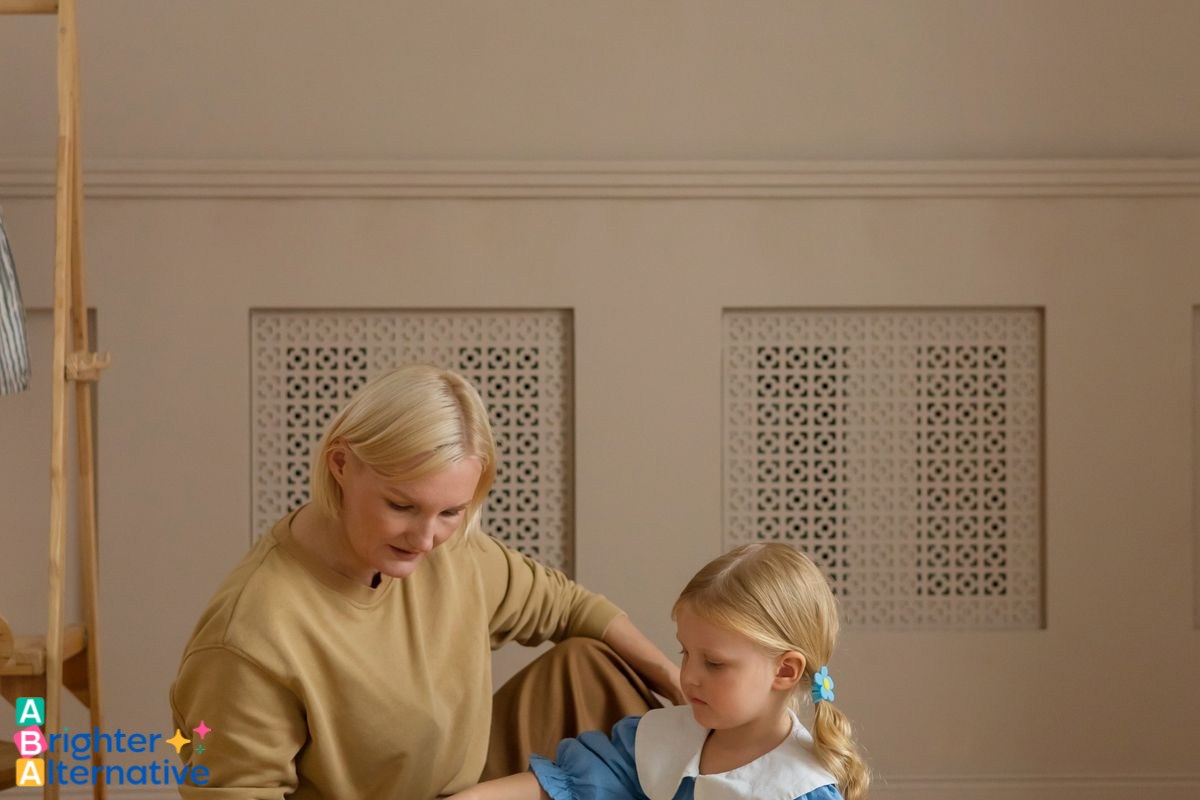
A session in your home follows a structure, even though it might look relaxed from the outside.
Most visits run between two and four hours, broken into smaller blocks of skill work, play, and short breaks. The technician usually starts by reviewing the last session's notes with you, then moves into structured activities tied to your child's specific goals, whether that's communication, following instructions, or a daily living skill like getting dressed.
Sessions are usually run by a Registered Behavior Technician, or RBT, working under a Board Certified Behavior Analyst's supervision. The BCBA typically visits in person less often, maybe every one to two weeks, to update the plan and observe how things are going. Ask upfront how frequently your child's BCBA will be in the home in person versus reviewing notes remotely.

There's a reason home-based autism therapy in Gwinnett County has grown so much in recent years, and it isn't just convenience. Families choosing home-based autism therapy in Gwinnett County often mention how much easier it is to fit sessions around school pickup, work schedules, and siblings' activities.
Skills learned in a clinic don't always transfer cleanly to everyday life. A child who can request a snack in a therapy room might struggle to do the same thing at their own kitchen table. In-home sessions build skills directly inside the routines where your child will use them, which cuts down on that gap.
Parents also get to watch sessions unfold live, which makes parent training far more practical. You're not asked to recreate a technique you only heard described. You watched it happen in your living room an hour ago.
Home-based care isn't the right fit for every goal. Skills tied to peer interaction, group instruction, or a classroom environment often need center-based ABA therapy or community-based ABA therapy to take hold well. Some families combine formats, using home sessions for daily living and communication goals while adding center hours for social skills.
Telehealth ABA therapy can also supplement in-home care, particularly for BCBA supervision visits or parent coaching sessions that don't require a technician physically present.
Not every clinic runs its home-based program the same way. Before choosing an ABA provider in Gwinnett County, Georgia, a short round of questions saves you from a poor match down the line. Any established ABA provider in Gwinnett County, Georgia should be able to answer these without hesitation.
A provider who answers these clearly, without hedging, tends to run a well-organized program in other areas too.
It's also worth asking how the provider coordinates with your child's school if daily living or communication goals overlap with classroom needs. A clinic that offers school-based support alongside home sessions can keep goals consistent across both settings, instead of your child working on two different versions of the same skill.
Cost and billing questions belong on this list as well. Ask exactly how the provider bills your insurance for in-home visits, since travel time and mileage are sometimes handled differently than center-based sessions. A clear answer here usually points to a clinic that runs its back office as carefully as its clinical program.
The first few months set the tone for everything that follows, so it helps to know what's normal.
Research on home-based delivery models backs up what many families notice on their own. A retrospective study of parent-involved ABA delivery found that families who stayed consistent with prescribed hours saw steady gains in communication, emotional regulation, and daily living skills over time.
By month four or five, most families settle into a rhythm where sessions feel like a normal part of the week rather than a disruption. Data collected during these early months also gives the BCBA a clearer picture of which teaching methods click best with your child specifically, which shapes how the plan evolves going forward.
ABA therapy in Gwinnett County GA has expanded quickly, giving families in cities across the county more scheduling flexibility than they had even five years ago. That expansion has made it more accessible for working parents who need evening or weekend availability, though it still pays to ask about current openings rather than assuming a slot is waiting for you.
Providers serving Gwinnett County often also cover nearby DeKalb County, so ask any clinic offering ABA therapy in Gwinnett County GA which areas their technicians realistically cover before you commit, since a technician commuting from far away tends to cancel more often.
If you're still getting familiar with the basics of ABA before committing to a format, the Child Mind Institute's overview of applied behavior analysis breaks down the different teaching approaches in plain language, which pairs well with the more hands-on details covered here.

Data collection looks a little different outside a clinic, since the environment changes from visit to visit. A technician working in-home ABA therapy in Gwinnett County still tracks the same core information, just adapted to whatever is happening in your house that day.
Ask to see a sample of this data early on. A provider who tracks clearly and consistently gives you something concrete to look at during progress reviews, rather than a vague summary of how the last few months went.
Most Georgia Medicaid plans and many private insurance plans cover ABA therapy regardless of setting, though specifics vary by plan. Confirm coverage directly with your provider before starting.
Providers generally want a parent or caregiver home and reachable, though you don't need to sit in the room for the entire visit. Ask your specific provider what they expect.
In-home sessions happen inside your child's daily routines and environment. Center-based therapy happens in a dedicated space with more structured peer interaction built into the day.
Most technicians work with whatever space you have. A quiet corner with minimal distractions is usually enough, and the BCBA can suggest small adjustments if needed.
Yes, many providers allow families to change formats as goals shift. Talk to your BCBA about whether a change makes sense for your child's current plan.
Choosing in-home ABA therapy in Gwinnett County means choosing a format built around your child's own world, not a clinic waiting room. The right provider makes that transition feel manageable from the very first visit, not overwhelming.
A Brighter Alternative trains and supervises technicians who work directly inside Gwinnett County homes, with BCBAs who stay closely involved in every family's plan. We build sessions around your routines, not the other way around.
Reach out to us to talk through your child's goals and see what an in-home plan could look like for your household.