



Key Points:
Your child can do something perfectly at the therapy table. Then? You're in a grocery store or at the park. It all falls apart. Sound familiar? This is one of the biggest challenges families face. It's also exactly why community-based ABA therapy exists.
Instead of practicing skills in a clinic, therapists go with your kid into the real world. They work on those same skills where your child actually needs to use them.
This article explains how community-based ABA therapy works. Why it matters. How to know if it's the right approach for your child right now.
Community-based ABA isn't just a field trip. It's structured. Goal-driven. Therapy that happens outside a clinic. Therapists go with your child into community settings. Grocery stores. Playgrounds. Libraries. Restaurants. Public transportation. They work on specific skills in those places. This is autism therapy in the community. It closes the gap between what your child can do in a controlled setting and what they can do in real life.
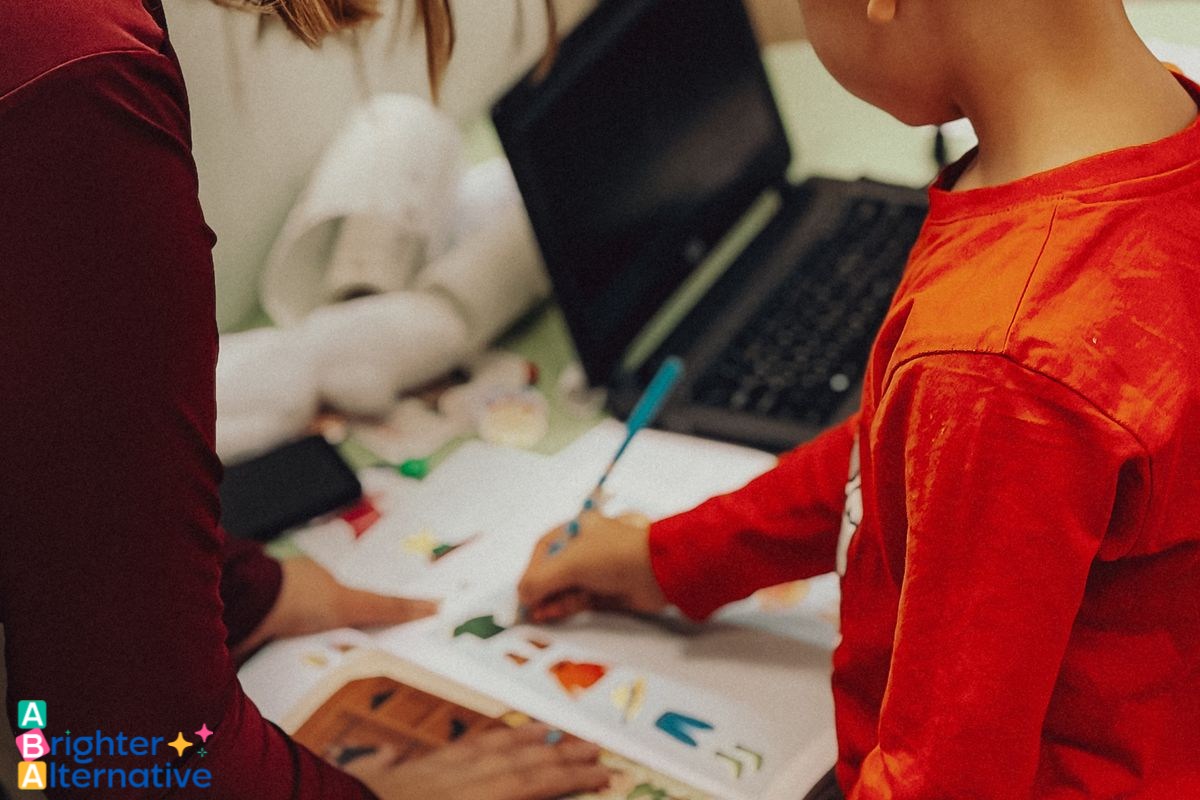
Sessions are still structured. The therapist has a plan. They target specific behaviors. They collect data, just like in a clinic. The difference? The backdrop. Instead of practicing asking for items using picture cards at a table, your child practices asking for items at an actual store counter.
This approach fits naturally with home and community ABA therapy programs. Those combine support at home with targeted practice in real community spaces.
-ink.jpeg)
Here's the core challenge with learning in a clinic. Skills learned in one place don't automatically transfer to another. This is called generalization. It means using a skill across different people. Different places. Different situations. It's one of the hardest parts of teaching kids with autism.
Skill generalization through ABA therapy is the reason community-based programs exist. When a child practices a skill in a store? They start linking that skill to the sensory experience of the store. The people. The noise. The routine. This makes the skill much more likely to stick.
Research on real-world learning through ABA therapy shows something important. Kids who practice skills in natural environments? They retain those skills better than kids who only practice in controlled settings. The real world provides natural motivation. Your child wants to ask for that snack. They want to go down that slide. That desire becomes the most powerful teaching tool out there.
Community-based therapy also reduces something called prompt dependency. In a clinic, kids sometimes learn to respond only when a familiar therapist gives a familiar cue. In the community? Prompts get faded naturally. The real environment provides its own cues.
This is where ABA therapy for social skills becomes powerful. Social behavior in the real world is fluid. Unpredictable. Practicing it with real peers in real situations builds a different kind of skill. Different from rehearsing it at a table.
Community-based therapy isn't always the starting point. Most kids begin with structured clinic or home-based work. They gradually add community practice as they build foundational skills.
Kids who are ready for community-based work typically have some basic communication skills. They can follow simple instructions. They've started to generalize some behaviors. Pediatric ABA programs in the community work best when these foundations are in place. The therapist can focus on application rather than initial learning.
That said, community-based therapy can also start earlier for specific goals. Let's say your child has a particular challenge around public behavior. Meltdowns at the grocery store, for example. A therapist might work directly in that environment. Other skills could still be getting built in a clinic.
Community-based therapy works best when families get actively involved. When you understand what your kid is working on in the community? You can reinforce those skills during regular outings. This is how child behavior support through ABA becomes a full-time practice. Not just a scheduled session.
Your child's therapist will share specific strategies you can use during everyday trips. Maybe visual supports you bring along. Specific language to prompt your child. Ways to structure the outing so your kid succeeds. This is also a key part of autism therapy guidance for families. It helps parents feel confident. Equipped too.
The goal isn't for your child to only succeed when a therapist is present. Early intervention ABA services that include community components give kids the best shot at real independence. Before they enter school. Before other structured settings.
-ink.jpeg)
Let's say your child's goal is to request items at a store without a meltdown. A community session might start with a quick conversation at home about what to expect. Then you head to the store with the therapist.
At the store, the therapist creates natural opportunities. Your child practices requesting. They practice waiting. Staying regulated comes into play. All this becomes part of the ABA therapy activities for children that build real-world independence.
The therapist collects data the whole time. They note what worked. What prompted a challenge. What needs adjusting. After the session, that data goes to the BCBA. The BCBA revises the plan as needed.
Over time, the therapist's level of support decreases. Your child starts doing more on their own. That shift from needing constant prompts to handling situations independently? It's the entire goal of community-based ABA therapy. It's also one of the most rewarding things a family can witness.
Most insurance plans that cover ABA therapy also cover community-based sessions. Coverage details vary by provider. Worth contacting your insurer directly. Ask your ABA provider to help with the authorization process.
Therapists get trained to manage challenging behavior discreetly in public settings. Calmly too. They plan for likely triggers. Strategies are ready. The goal is always to teach. Not just manage.
For most kids, community sessions complement clinic-based work. They don't replace it. The two approaches work together. The clinic builds foundational skills. The community setting is where those skills get applied. Where they get generalized too.
Frequency depends on your child's goals. Their program too. Some kids have one or two community sessions per week alongside clinic sessions. Your BCBA will recommend a schedule that balances all therapy environments.
Therapists are trained to recognize early signs of distress. They adjust or end a session before things escalate. Community sessions are paced carefully. They build up gradually. Your child never gets pushed past their current capacity.
Real progress shows up in real life. Not just in therapy rooms. A Brighter Alternative brings community-based ABA therapy to the places your child actually lives. Shops. Plays. Grows. Each session has purpose. Data backs it. It's designed to build independence that lasts beyond any single outing.
Your child's best moments are waiting out there. Reach out to us. Let's build a community-based plan that helps your child thrive in every setting that matters.




Now Accepting GA Medicaid




-ink.jpeg)